
Protect. Preserve. Restore.
Sample Post
President’s Message
Our interactive Google Map can be accessed using this QR Code:

- A few months into 2024 and we are examining many issues related to protecting our water resources.
- Water refill stations have doubled in number and can now be found at parks, sports fields, beaches, and other recreation areas throughout Falmouth.
- Our water monitoring programs for cyanobacteria in Falmouth ponds in collaboration with APCC will begin in May and continue through November.
- Our Pond Atlas with results from the 2022 pond and stream nutrient monitoring during summer and winter at 36 Falmouth ponds and streams will be released this Spring.
2023 Cyanobacteria Monitoring Review
In response to increasing frequency of cyanobacteria blooms in freshwater lakes and ponds across Cape Cod, we partnered with the Association to Preserve Cape Cod (APCC) again this year to monitor Falmouth ponds for the presence and abundance of cyanobacteria. Sixteen Falmouth ponds are monitored biweekly from May to November and data are added to the Cape Cod Cyanobacteria Monitoring Network. Falmouth Water Stewards collects samples from six of the sixteen ponds in the Falmouth program: Cedar Lake, Deep Pond, Fresh Pond, Jenkins Pond, Mares Pond, and Siders Pond. In 2022 APCC established Cyanobacteria Risk Categories to compare severity of bloom conditions in each pond: acceptable, potential for concern, or use restriction warranted. With five years of data for the six Falmouth ponds sampled by FWS, we examined seasonal trends in each pond on an annual basis to pinpoint possible environmental triggers associated with the occurrence of cyanobacteria blooms. Based on the risk criteria, the most common times when ‘potential for concern’ or ‘use restriction warranted’ warnings are posted, are during the early summer and fall. This program has increased awareness for local residents to be on the lookout for signs of cyanobacteria blooms.
Falmouth Freshwater Ponds Advisory Committee
The Town of Falmouth established a Falmouth Freshwater Pond Advisory Committee with the objectives of advising the Select Board and the Town Manager on the protection and preservation of Falmouth’s ponds. The mission of this new committee is to advise the Select Board and Town Manager on the protection and preservation of Falmouth’s freshwater ponds, and to recommend goals, strategies, action steps, and measurable outcomes that can be integrated into the Town’s overall strategic plan. On April 22nd, the Falmouth Select Board approved Kim Comart, Lynn Francis, George Heufelder, William Kerfoot, and William Mebane as committee members, with Steven Solbo as an alternate member.
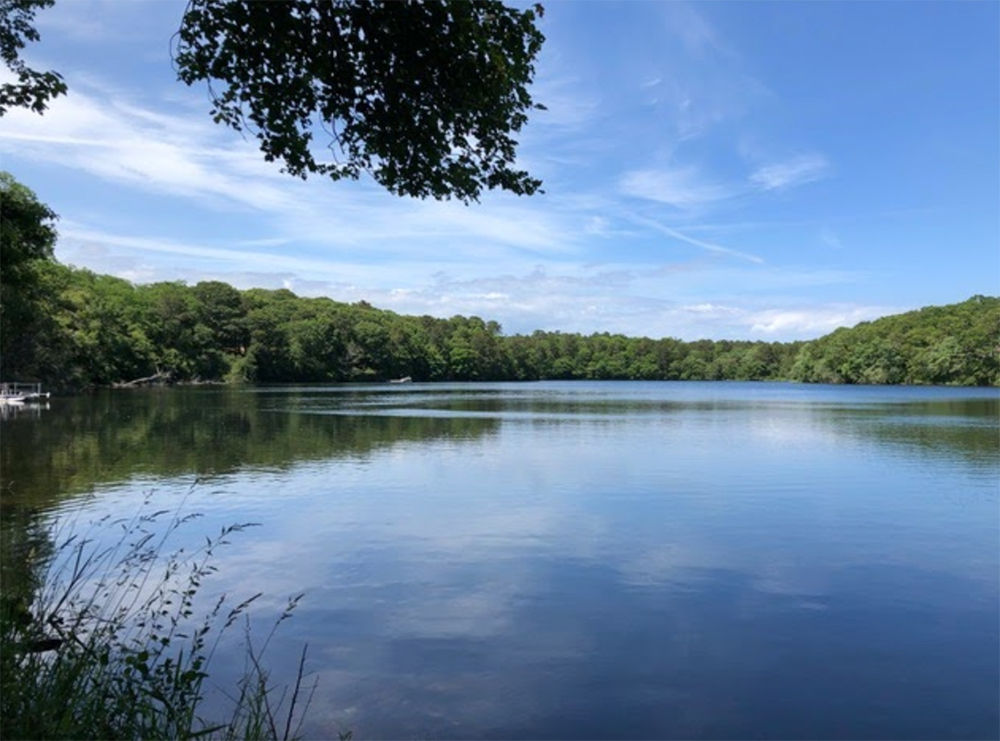
Fresh Pond, summer 2023
Falmouth Pond Atlas
FWS received funding from the Woods Hole Foundation to survey 36 ponds, rivers, and streams in Falmouth for assessing water quality characteristics during both summer and winter. Runoff of plant nutrients (nitrogen, and phosphorus) from land degrades the quality of surface waters. These impacts include excessive growth of algae, periodic low oxygen, and blooms of potentially harmful algae. While nitrogen largely drives water quality declines in coastal salt waters, both nitrogen and phosphorus contribute to water quality decline in fresh waters.
Results from the summer sampling revealed five concerns:
(1) Nitrate is high in rivers and low in ponds; this is expected, as rivers are carrying groundwater that is enriched in nitrate from septic systems. Plankton and submersed plants growing in summer take up nitrate and ammonium.
(2) Most ponds had low levels of ammonium and nitrate (inorganic and available) nitrogen; exceptions seemed to be Siders Pond (a unique pond due to its salinity profile), and Deep Pond that had higher nitrate levels than other ponds. It is likely that pond nitrogen is mostly low but occasionally high when a phytoplankton bloom ends (it did not have particularly high chlorophyll).
(3) Some ponds were particularly notable for high chlorophyll: Wings, Punch Bowl, Shallow, and Mill ponds in Woods Hole and East Falmouth.
(4) Phosphate was low almost everywhere, but highest in the two Mill Ponds.
(5) Temperature and dissolved oxygen profiles in all but the very shallowest ponds were highly stratified and hypoxic or anoxic in the bottom water, and thermoclines were at 5 to 7 meters. In contrast, winter sampling revealed well-mixed water columns at all sites.
All results from the Falmouth Pond and Stream Survey will be published in the FWS Pond Atlas that will be distributed during spring 2024. Winter and summer profiles for each sampling location will be included.
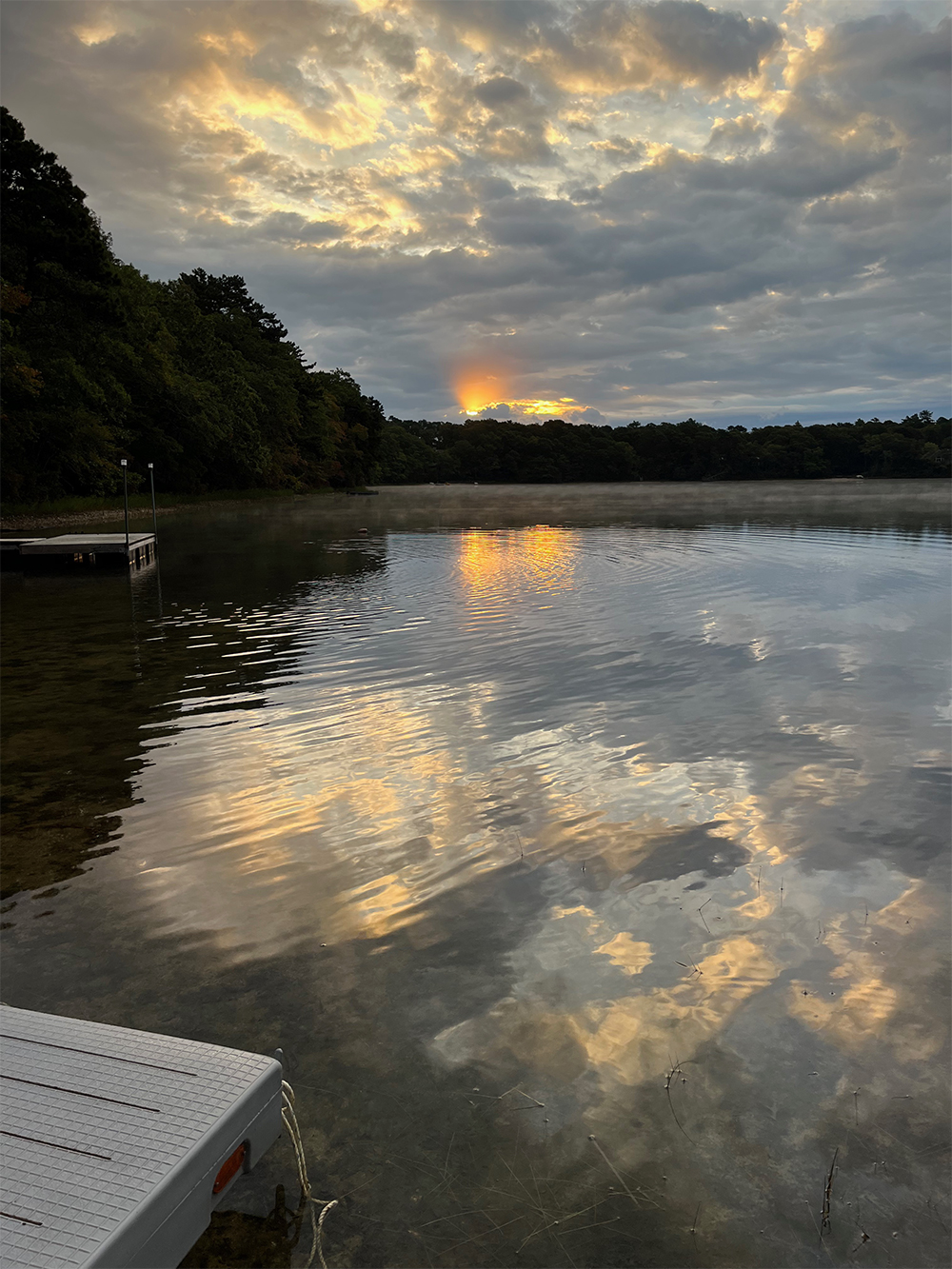
Mares Pond, summer 2023
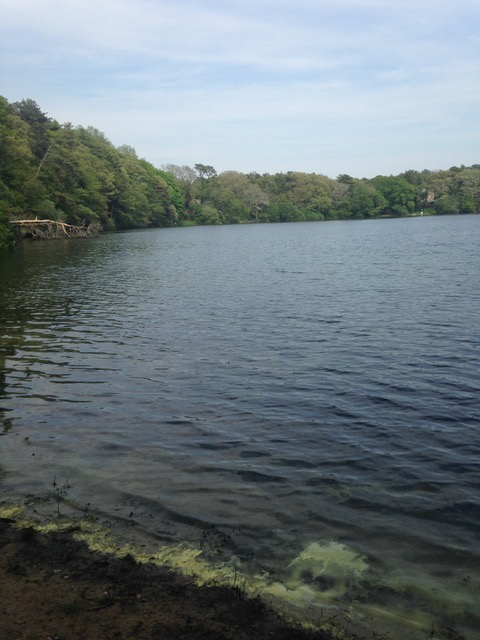
Deep Pond, summer 2023


